


http://www.usatoday.com/news/world/s...009/56024902/1
What amazes me is how, even after its shown to be due to several faults, its pilot error at the end of the day...


http://www.usatoday.com/news/world/s...009/56024902/1
What amazes me is how, even after its shown to be due to several faults, its pilot error at the end of the day...
And I, I took the path less traveled by
and that has made all the difference......yet...
I have a feeling a handle of people are going to be very interested in what I post in the near future.
http://www.jetphotos.net/showphotos.php?userid=187
It truly was Mario....if there is confusion about the speed, and your getting incorrect info...you are suppose to throttle to a certain setting and trim the aicraft to almost neutral and it will continue to fly with no autopilot and with setting that are not correct. They were ok when it started...wrong info led them to make wrong decisions.
Looking from outside the box...engine fails and the pilot crashes the plane = Pilot Fault 100% of the time unless there was other damage or issues.... In this case...it was not an engine but still it is the same thing.
It was a shame but no accident is cause by one error....it usually starts with something really minor and turns into a series of clusterf***s. Very Sad
The three most common expressions in aviation are, "Why is it doing that?", "Where are we?" and "Oh Crap".


It is incredibly sad. Such a small part of such a large aircraft doomed everybody. However, any pilot flying such an aircraft should know how to maintain level flight until any issue is resolved.
That said, the pilots were bombarded with errant and confusing warnings, so there is something to be said about that.
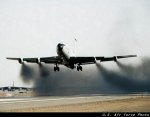
At the end of the day, they flew a perfectly good airplane into the ocean. Yes, they had an airspeed indicator problem - and from Day 1 of private pilot training, through T-37s, T-38s and on to the KC-135, I learned "pitch and power". Set a know power setting, hold a specific pitch attitude, and the airplane will perform in a known manner. When these guys were cruising straight and level at a steady airspeed and were faced with a loss of airspeed data, they pulled the stick back and held it there until the airplane stalled and continued to hold the stick nose up while it dropped over 35,000 feet, rather than continuing to fly the pitch and power that gave them steady state flight. Yes, that's pilot error.
KC-135 - Passing gas & taking names!
http://www.jetphotos.net/showphotos.php?userid=15086
http://moose135.smugmug.com


very very sad how pilots can make these kind of errors, it makes me think back what happened to that Birgenair Boeing 757 in at Santo Domingo back in 1996, The Pilots were recieving wrong info on the airspeed during take off because of something in the pitot tubes, the first mistake the pilots made was they never aborted the take off, and the plane was on autopilot as they tried to figure out what was wrong. The plane stalled and went out control and crashed into the pacific killing all aboard. the cause was maintanence and pilot error.. very sad..
Sergio has been a huge Delta Air Lines fan since 1992!!
Sergio Cardona
http://www.jetphotos.net/showphotos....e=1&display=15

I'd like to add 'carrier training error' and 'manuafacturer error' to the list please, since they should also bear some of the responsibility for killing those people
Let me ask a related question, since the prevailing notion seems to be along the lines of 'set power to 85% and 5 degrees pitch up until the problem is worked out'. So you have an aircraft that's basically having the electronic equivalent of a stroke because of the blocked tubes. Knowing that the speed data you were presented with was suspect at best, how would you know to trust your EPR/N1 numbers? How would you know what power setting was what in reality, or would that be bogus too? Since there would be no visual references during a night flight, how would you REALLY know what you were doing? I'm not a pilot, some of you are, but I think that's a valid question.
Systems issues coupled with loss of SA have happened before, with Birgen and AeroPeru, with the same results. I'm just suggesting that these scenarios are much more complex than pilot error. So, I'm going with 'pilot/airline/manufacturer' error.



Fly by wire at it's worst. Ever since Airbus created it it's basically designing the pilot out of the cockpit. Which was proven here. Maybe pushing the nose down via a convential yoke may have saved the aircraft if the PIC was used to that. It sure seems these pilots were not trained properly in this situation because that was a total breakdown and they seemed totally confused. Yes this is total pilot error IMO.
'My idea of a good picture is one that's in focus and of a famous person doing something unfamous.' Andy Warhol

Sadly, Nick is right about fly-by-wire in this case. I really don't mean to bang the Boeing/Airbus drums, but this crash would not have happened if it were on a Boeing...the sidestick being out of view to others in the cockpit and non-dual movement in the stick is what ultimately brought the plane down because no one knew the F/O was pulling back for so long until right before the end. I know pilots get blamed for a lot, but this crash is just pilot error...there is no reason that the problems they had should have actually led to a crash.
Email me anytime at [email protected].
What a terrible loss of life, RIP for all the souls on board.Originally Posted by Phil D.

..... if both joysticks gets different imput, airbus does not have any conflict message on PFD or an aural warning? I guess the joystick are not synced right?
Definitely looks that the confusion in the cockpit was precipitating factor for the crash, and overall lack of command ( mostly by PIC ) made the situation worst.
If we're only talking about the one contribution in the sequence of the one pilot pulling back on the stick, then yes I guess it can simply be called "pilot error". But again, the carrier and Airbus should be found to be equally responsible. I think it's irresponsible to simply say, "Air France 447 crashed due to pilot error."
I'm not saying pilot error wasn't a part of this, I'm saying it's a much smaller piece of the puzzle that people are saying it is.
So, if you lose airspeed data due to a faulty part issue and then can't fly the plane properly after the autopilots disconnect due to a carrier training issue, the blame should rest squarely on your shoulders? If people truly understand this from a systems perspective, it should be clear that what they did does not exist in a vacuum.
Personally, under those circumstances, I don't know that I could trust the EICAS data enough to assume that what I thought I was setting as 85% thrust was actually 85%. How would I know for sure, especially if there were other inaccuracies(speed)?
Wrong info leading to wrong decisions. Sad. Same happens in healthcare. Patients are not always forthcoming with details that can aid a diagnosis. Instead they rely on tests and tests and tests thinking that will nail the diagnosis. But you'd be surprised how some will withhold info that can aid in their treatment.
Moose, that is what I just can't fathom. If you are losing airspeed data, didnt they still have altitute data? Can't understand the mindset but then again I wasn't in their gale storm.
Here's a simple and perhaps naive thought. If the plane had an analog horizon indicator, would it have helped???
And I, I took the path less traveled by
and that has made all the difference......yet...
I have a feeling a handle of people are going to be very interested in what I post in the near future.
http://www.jetphotos.net/showphotos.php?userid=187
On a Boeing, when one pilot pulls back, the other yoke moves with it...there's no mistaking what's going on. On an Airbus, the sticks operate independently, with the aircraft performing the median between the two inputs from the two pilots.
Pilots are trained to deal with airspeed faults. There is no reason that a plane should experience what AF447 experienced in terms of mechanical troubles and not have been able to land safely. They do this in training and simulators many times over, and airspeed indication loss goes back to early pilot training days.
EICAS messages or not, they knew something was up with the airspeed just by their stalling. The pilot pulling back on the stick was the one true cause for the crash-causing stall....the airspeed issue, in my view, a minor factor.
I don't think the pilot's actions were a "smaller" piece of the puzzle. It's the largest piece to me, by far. It was the pilot input that caused this plane to crash and nothing else. He pulled back in a stall, bottom line. That's the only reason this plane actually crashed. They would have managed fine with all of their airspeed/throttle issues if they followed the books and their training.
The thing is that the pilots KNEW they were falling and they KNEW they were nose-up. None of the pilots (except the F/O) knew that the F/O had been pulling back that whole time. Maybe they could have communicated, but it's such a Day 1 mistake on the FO's part that the other pilots couldn't figure out why they were nose-up and falling that whole time. The left-seat pilot was pushing forward, but the FO's input overpowered it. They stood there trying to figure it out during the entire descent.
Email me anytime at [email protected].
Disclaimer: I am not a pilot.
OK, now that that is out of the way. Isn;t there any FEELING left in your own body as to how fast or slow or pitch/yaw/roll ? I mean, as a PAX sitting way back, I can usually tell what the plane is doing, even if my eyes are closed. When all else fails, turn off all the effin automation and use your gut at least to a sense of control.
I also believe that small inputs on the controls, except in an emergency, can make a better difference in keeping your cool and figuring out where the right position should be. Just think of driving on an icy road... your own internal gut balancers are put to good use... last time I checked, there were little to no controls or sensors on my car. OK, so my new car has Anti-Lock (I still lay off the brakes ON TOP OF the Anti-Lock engaging or not) and anti-skid (I usually won;t throw the car into a snowy right hander at 55MPH) butthat's another story.
Disclaimer again: I am not a pilot
Manny Gonzalez
Thrust Images | General Photography | R.I.P. Matt Molnar 1979-2013
BRING BACK THE KJFK/KLGA OBSERVATION DECKS
Gut doesn't mean much except for some of the first movements...once a plane is set in a direction, you may not notice slight adjustments. Auto-pilots are known for making turns that ar slightly harder/faster than hand-held flying.
But honestly, none of that mattered here. They knew their exact pitch and everything...they (except for the FO) just didn't know WHY they were positioned as such. they didn't realize the FO was actually making it that way.
Email me anytime at [email protected].
Manny, once you strip your vision from the outside world as a reference, (think: JFK, Jr., also flying at night) you can't completely rely on inputs from your inner ears and gut.
Also, WHY WHY WHY was the FO pulling up? I dont understand! Im not a pilot but if I were losing airspeed, my intuitive sense would say to put the nose down.
And I, I took the path less traveled by
and that has made all the difference......yet...
I have a feeling a handle of people are going to be very interested in what I post in the near future.
http://www.jetphotos.net/showphotos.php?userid=187
 Posting Permissions

 Reply With Quote
Bookmarks