Page 2 of 2 FirstFirst 12
Results 16 to 23 of 23

Thread: 757 "Heavy"

  1. #16
    Administrator PhilDernerJr's Avatar
    Join Date
    Apr 2005
    Location
    Queens, NY
    Posts
    12,467
    Moose, that was one of the most interesting things I've ever read on this site. Thank you.

    Isn't there also the possibility of a stall immediately upon takeoff behind a large plane. Liek where the on-ground wake turbulence gives the next aircraft added lift, and once that plane goes airborne earlier than the wake turbulence, it's like loss of air and the potential for stall. Make sense?
    Email me anytime at [email protected].

  2. #17
    Senior Member Futterman's Avatar
    Join Date
    Apr 2005
    Location
    Rego Park/Forest Hills, NY
    Posts
    877
    Pretty intense stuff, Moose! Thanks for sharing.

    Quote Originally Posted by Phil D.
    Isn't there also the possibility of a stall immediately upon takeoff behind a large plane. Liek where the on-ground wake turbulence gives the next aircraft added lift, and once that plane goes airborne earlier than the wake turbulence, it's like loss of air and the potential for stall. Make sense?
    "Loss of air"?? Whatever. :)

    Sounds like you're talking about two different things here. The direct effect of flying into wake turbulence is an uncontrollable rate of roll, which may very well induce a stall at some point. Remember what exactly wake turbulence is - just wingtip vortices. It would be kind of like putting a rubber duck in a full, still tub, then pulling the drain and watching how the water just spins the thing around. In fact, that whipping sound you hear after a plane passes over you at Landing Lights Park is actually the air swirling and snapping around (wake is invisible unless, as you see below, you fly through a cloud).

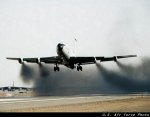
    Simply put, if you go into this:


    You come out like this:


    What you're talking about with stalling is more in line with something called ground effect, which is a phenomenon that allows a plane (typically light) to get airborne at a slower-than-normal speed. But that's neither here nor there.

    Brian
    "My wife is an air traffic controller. I married her because I've always wanted to screw the FAA." - B. Wulle

  3. #18
    Senior Member cancidas's Avatar
    Join Date
    Apr 2005
    Location
    traffic two o'clock two miles southbound flight of four C-130s
    Posts
    6,088
    the 752 is considered a heavy for wake turbulence avoidance reasons. it is given the same spacing as a 767 or 777, regardless of how much the airplane weighs at the time. as said before, some airframes are capable of exceeding the 255,000 lb limit. not sure if in those cases they are called heavy. most times, the -200 isn't heavy. the -300 always is.

    avoiding wake turbulence can be tricky some times. say you're following a G-IV in my A36. to avoid the wake turbulence he produces you need to stay above his flight path. if he touches down at the 1000' marker than i would float a little until about 1500' or 2000' before touching down. if i were taking off behind him then i would first be required to wait the 3 minutes before being cleared for t/o. then, i would rotate and climb out well before the other airplane rotated, and climb out above his climb path. if you're lucky enough to have a crosswind then you simply fly upwind and above the flight path of the other airplane.

    diclaimer: it's been a while since i've been to ground school. and i need to update my manuals, i still have the 7110.65P
    it is mathematically impossible for either hummingbirds, or helicopters to fly. fortunately, neither are aware of this.

  4. #19
    Senior Member moose135's Avatar
    Join Date
    Apr 2005
    Location
    Long Island, NY
    Posts
    8,013
    Thanks, Phil. Actually, I was going through a box of stuff this weekend and came across some of my old KC- manuals...sure brings back some memories.

    As Brian said, I don't think running into wake turbulence will help you take off any sooner. Sounds like you are thinking more of ground effect, where you can lift off at a lower than normal airspeed, then keep the plane down low (usually no more than one wingspan's distance from the ground) while you build up airspeed. That's actually a normal way to take off from a soft field.

    And one more little "war story" from the tanker. During initial training, and occasionally at the unit with an IP, we would fly a Landing Attitude Demo - fly a normal approach down to the flare, then with the nose up in the landing attitude, add some power and fly down the runway in ground effect until you go around. It was a good way to teach a new pilot the proper visual picture for landing. I think we had to do one every six months or so once qualified, and it was a good refresher when you were in a little bit of a landing "slump" (Not that I would know anything about that)

    Matt, excellent description of how to avoid running into wake turbulence, and you can download a PDF version of 7110.65R at http://www.faa.gov/ATPUBS/ATC/ATC.pdf

  5. #20
    Senior Member
    Join Date
    Oct 2006
    Location
    Ottawa, ON
    Posts
    149
    Hey, thanks for sharing those stories.

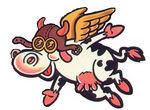
    I guess that warning in the manual would be like having something like this on the underside of the horizontal stabilizer:


    :)
    I'm learning to fly, around the clouds. But what goes up must come down. - Tom Petty

  6. #21
    Moderator mirrodie's Avatar
    Join Date
    May 2005
    Location
    Me like the Robert Downey Jr of cooooooookies!
    Posts
    5,746
    Brian,

    How did you get Sam Chui take air-to-air picture of you flying?


    Wow!

    ;)
    And I, I took the path less traveled by
    and that has made all the difference......yet...
    I have a feeling a handle of people are going to be very interested in what I post in the near future.

    http://www.jetphotos.net/showphotos.php?userid=187

  7. #22
    Senior Member Futterman's Avatar
    Join Date
    Apr 2005
    Location
    Rego Park/Forest Hills, NY
    Posts
    877
    Mario,

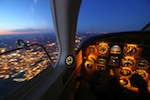
    Sam was there, but that's not his shot. He hasn't released his to the public yet, but I have permission to give you a sneak preview of the brilliant product of his fisheye lens:


    What a day!

    Brian
    "My wife is an air traffic controller. I married her because I've always wanted to screw the FAA." - B. Wulle

  8. #23
    Senior Member
    Join Date
    May 2005
    Location
    New York
    Posts
    557
    Previously the heavy designation applied for aircraft 300,000lbs and higher . now it's 255,000lb Additionally outside of the US , the heavy suffix is not used.


    the controller knows it's a heavy from the Flightplan's filing . It looks something like this

    the B752/H <- The "H" indicates heavy

    FPL-AMT453-IS
    -B752/H-CSSXWRIY/S
    -PHNL0830
    -N0486F330 DCT XXX B453 SIMLU/M084F330 B453 SPEES/N0485F330 B453
    I also found some items you all might find interesting reading , or at least some of it as it pertains to the 757

    http://www.ll.mit.edu/AviationWeather/W ... iction.pdf

    this one briefly talks about a cessna Citation accident which was the result of a 757's wake
    http://www.mbe.doe.gov/me2-4/oam/docs/fsn/9401.htm

Bookmarks

Posting Permissions

  • You may not post new threads
  • You may not post replies
  • You may not post attachments
  • You may not edit your posts
  •